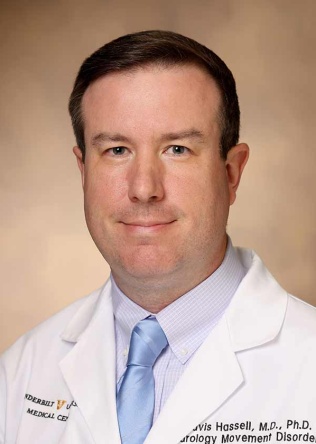
Mallory Hacker, PhD, MSCI

Mallory
Hacker
PhD, MSCI
Assistant Professor
Movement

Dr. Hacker is Assistant Professor of Neurology at Vanderbilt University Medical Center. She received the 2019 Kumar New Investigator Award from the North American Neuromodulation Society. She has received funding from the National Institute of Neurological Disorders and Stroke (NINDS), the National Institute on Aging (NIA), the Department of Defense's Congressionally Directed Medical Research Program (CDMRP), the Michael J. Fox Foundation for Parkinson’s Research (MJFF), and the American Parkinson Disease Association (APDA). 

Dr. Hacker earned a B.S. in Chemistry in 2007 from the University of Tennessee at Chattanooga. She attended Vanderbilt University where she earned a Ph.D. in Cell and Developmental Biology studying neurodegenerative pathways arising from Coenzyme Q deficiency in 2013. She received postdoctoral training in neurology clinical research at Vanderbilt University Medical Center (VUMC) and was a visiting assistant professor at the Bloomberg School of Public Health at Johns Hopkins University in 2016. She completed the Vanderbilt School of Medicine Master of Science in Clinical Investigation (MSCI) program in 2019.

Dr. Hacker’s research focuses on understanding the effects of deep brain stimulation (DBS) in very early-stage Parkinson’s disease patients and studying objective methods to evaluate Parkinson’s disease progression. She also investigates the prevalence and impact of spasticity in the long-term care setting as well as ways to improve its screening, referral, and treatment. 

Newswise: Sweet-Spot Brain Stimulation May Halt Parkinson’s Progression

VUMC Reporter: Deep brain sweet spot might be key to halt Parkinson’s

Neurology Advisor: Benefits of Deep Brain Stimulation for Early Stage Parkinson Disease

Technology Networks: 5-year Study Shows the Long-term Efficacy of Deep Brain Stimulation in Parkinson's

Medical Xpress: Nursing home study reveals 'woeful' underdiagnosis of spasticity

VUMC Discover: Reducing Untreated Spasticity in the Elderly

VUMC Reporter: Neuromodulation Society honors Hacker’s Parkinson’s research

The Tennessean: For Parkinson’s patients, a surreal brain surgery offers new hope

VUMC Reporter: DBS treatment may slow tremor progression in early-stage Parkinson’s patients

VUMC Reporter: Trial to test whether DBS slows Parkinson’s progression


Kevin Haas, MD, PhD

Kevin
Haas
MD, PhD
Professor
Epilepsy
Division Chief
Epilepsy
Clinical Director
Epilepsy Surgery

Dr. Kevin Haas joined the Vanderbilt Neurology Department faculty in 2004. His clinical focus is epilepsy and he serves as Clinical Director of the Epilepsy Surgery Program and as EEG Laboratory Director.  He rotates as an attending physician on the Neuro-ICU EEG and Epilepsy Monitoring Unit services. He is board certified in Neurology, Epilepsy, and Epilepsy Monitoring.  Dr. Haas is a fellow of the American Epilepsy Society, a fellow of the American Neurological Association, and a member of the American Academy of Neurology.

Dr. Haas earned his BS in biomedical engineering from Duke University in 1991, graduating magna cum laude with distinction. His completed his graduate and medical school training at the University of Michigan, where he earned his PhD degree in neuroscience in 1998 and MD degree in 1999. At Emory University, he completed his internal medicine internship in 2000, neurology residency in 2003, and clinical neurophysiology fellowship with an emphasis in epilepsy in 2004. He served as chief resident in neurology for the 2002-2003 medical year.

Dr. Haas’s clinical research projects focus on epilepsy surgery, ICU-EEG monitoring, epilepsy genetics, and status epilepticus. He is the Vanderbilt site principal investigator for the Critical Care EEG Consortium. In addition, he currently serves as the site principal investigator for multiple clinical trials evaluating new antiepileptic drugs and devices for diagnosis and treatment of medication-resistant epilepsy.  

Dr. Haas’s past research has focused on GABA-A receptor physiology, synaptic roles of ubiquitination, and epilepsy in Angelman syndrome. He is an author on numerous original articles in these fields.

Sarah Graves, MSN, FNP-BC

Sarah
Graves
M.S.
APRN
General Neurology

Sarah Graves is a family nurse practitioner in the Department of Neurology at Vanderbilt University Medical Center, a position she has held since 2016. In her role, she collaborates with a multidisciplinary team to manage the outpatient General Neurology patient population. She assesses, diagnoses and manages patients with a variety of neurological conditions including Alzheimer’s disease, Parkinson’s disease, headache, migraine, essential tremor, multiple sclerosis, and stroke. 

Prior to her current position in the outpatient clinic, Sarah also served as a critical care nurse in the Neurology ICU at VUMC. She received her BSN at Florida Gulf Coast University, and later earned her MSN from Belmont University in 2015. 

Research Presentations

Presented at the 11th Annual Cleveland Clinic Nursing Research Conference in Aurora, OH. Balance, C., Graves, S., Harvey, M., Lucas, E., & Smith, A. (2014). Strategies for medication adherence in patients with type 2 diabetes mellitus: a system review.

Martin J. Gallagher, MD, PhD

Martin
J.
Gallagher
MD, PhD
Associate Professor
Epilepsy
Vice Chair
Basic Science Research

Dr. Gallagher is currently Associate Professor of Neurology at Vanderbilt University Medical Center, with a predominant clinical focus in the medical and surgical treatment of patients with epilepsy. He is board certified by both the American Board of Psychiatry and Neurology in three specialties, Neurology, Clinical Neurophysiology, and Epilepsy Monitoring. 

Dr. Gallagher earned his BS in chemistry from the University of Notre Dame in 1989, graduating summa cum laude. He was a visiting scholar in neurobiology at Harvard University Medical School from 1992 to 1996, and earned a PhD in molecular biophysics and an MD from Washington University in 1997. He began his postgraduate training with an internship in internal medicine at Washington University, completed a neurology residency at Washington University in 2001, and a surgical epilepsy fellowship at Washington University from 2001 to 2002. Dr. Gallagher became an instructor of Neurology at Washington University in 2001 and joined the faculty at Vanderbilt University Medical Center as assistant professor of Neurology in 2002 and was promoted to associate professor (tenured) in 2010.

Dr. Gallagher’s main research interest is the elucidation of the interactions between epilepsy genes and environmental factors, such as traumatic brain injury, that promote the formation of epileptic circuits and that inhibit the normal functioning of cognitive networks. He uses electrophysiological techniques coupled with advanced signal processing analyses to interrogate the networks and then employs molecular and electrical neuromodulation approaches to restore normal neurophysiological functioning. 

Dr. Gallagher earned his B.S. in chemistry from the University of Notre Dame in 1989, graduating summa cum laude. He was a visiting scholar in neurobiology at Harvard University Medical School from 1992 to 1996, and earned a Ph.D. in molecular biophysics and an M.D. from Washington University in 1997. He began his postgraduate training with an internship in internal medicine at Washington University, completed a neurology residency at Washington University in 2001, and a surgical epilepsy fellowship at Washington University from 2001 to 2002. Dr. Gallagher became an instructor of Neurology at Washington University in 2001 and joined the faculty at Vanderbilt University Medical Center as assistant professor of Neurology in 2002.

Dr. Gallagher is board certified by both the American Board of Psychiatry and Neurology and the American Board of Clinical Neurophysiology in three specialties, Neurology, Clinical Neurophysiology, and Epilepsy Monitoring, and he is currently an attending physician at Vanderbilt University Medical Center. His main research interest is in the elucidation of the molecular mechanisms by which mutations in epilepsy genes cause disease. His predominant clinical focus is in the medical and surgical treatment of patients with epilepsy.

Kenneth J. Gaines, MD, MBA

Kenneth
J.
Gaines
MD, PhD
Professor
Vascular

Dr. Kenneth Gaines is currently Professor of Neurology specializing in stroke medicine at Vanderbilt University Medical Center (VUMC) and the Vanderbilt School of Medicine. He also is a Scholar for the Center for Health Services Research. He is a Fellow of the American Academy of Neurology (FAAN), American EEG Society, the Stroke Council of the American Heart Association, and the American Society of Physician Executives, in addition to numerous other professional memberships. Dr. Gaines is also currently a hospital staff neurologist for Ochsner Clinic Foundation in New Orleans, LA, as well as over 30 additional hospitals via telemedicine. He is a current reviewer for Lancet Neurology and Journal for Neurological Sciences.

Dr. Gaines is the recipient of several honors and awards, including System Physician of the Year for Oschner Clinic Foundation (2010), Innovative Project of the Year for Oschner Clinic Foundation (2011), serving as a Governor-appointed Commissioner for the Louisiana Emergency Response Network (2012-2016), and an election to the Palatucci Leadership Forum for the American Academy of Neurology (2004). Throughout his career, Dr. Gaines has held positions in numerous leadership offices and committees, currently participating in the Telemedicine Work Group for the American Academy of Neurology, the Hospital Alliance of Tennessee Telemedicine Task Force, and the Tennessee Department of Health Stroke Task Force.

Prior to his tenure at Vanderbilt, which began in 2015, Dr. Gaines served in a number of academic positions at institutions including the University of Queensland (Brisbane, Australia), Wright State University, Louisiana State University, University of South Carolina, Meharry Medical College, Michigan State University, University of Tennessee, and the University of Mississippi. In addition to his academic roles, his clinical experience includes private practice, hospital staff appointments, telemedicine, and consulting neurology. 

Dr. Gaines earned his MD from the University of Tennessee, followed by his Neurology residency and a Fellowship in Neurophysiology, also at the University of Tennessee. He later earned his MBA degree from the University of Memphis.

Dr. Gaines has acted as Principal Investigator or Co-Investigator on dozens of clinical trials and studies throughout his career, both industry-sponsored and NIH funded. He is currently Co-Investigator for a study on rural ambulance telemedicine sponsored by the U.S. Department of Agriculture, and a National Principal Investigator for a C3FIT (Comprehensive, Coordinated, Collaborative, Family-focused, Integrated, Technology Enabled) Stroke Care Delivery Design Randomized Comparative Effectiveness Trial.

Michael Froehler, MD, PhD

Michael
Froehler
MD, PhD
Associate Professor
Vascular

As a neuro interventionalist and stroke neurologist, Dr. Froehler cares for patients with brain aneurysms, AVMs, arterial narrowing in the head and neck, and other related cerebrovascular diseases. 

Dr. Froehler obtained his MD from the University of Rochester, where he also earned a PhD in neuroscience. He then performed internship and residency in neurology at Johns Hopkins, before moving to UCLA for fellowship training in vascular neurology and then interventional neuroradiology. He then joined the faculty at the University of Iowa before coming to Vanderbilt in 2013. He is now part of the Vanderbilt Cerebrovascular Service. 

Dr. Froehler maintains an active research program, and is currently the Vanderbilt PI for the NIH-sponsored StrokeNet – a national network for clinical research in cerebrovascular disease. 

John Y. Fang, MD

John
Y.
Fang
MD
Associate Professor
Movement

Dr. Fang is Associate Professor of Neurology at Vanderbilt University Medical Center. At Vanderbilt since 1998, Dr. Fang focuses on the treatment of early Parkinson's disease and other movement disorders. He is also a staff physician at the VA Tennessee Valley Healthcare System.

From 1995-98, Dr. Fang served in the Public Health Service, working in the Clinical Pharmacology Section of the Experimental Therapeutics Branch of the National Institute of Neurologic Disorders and Stroke, focusing on clinical studies in Parkinson's disease and other neurodegenerative disorders.

Dr. Fang earned a BS degree, with Distinction, from the Pennsylvania State University in 1989 and received his MD from Jefferson Medical College in 1991. He completed an internship in Internal Medicine at Bryn Mawr Hospital in Bryn Mawr, PA (1991-92), and performed his residency in Neurology at Thomas Jefferson University Hospital in Philadelphia, PA (1992-95) where he was Chief Resident.

Dr. Fang’s research interest is in the treatment of Parkinson's disease (and other movement disorders) and in particular conducting clinical trials to delay the progression to disability in neurodegenerative conditions. Through a combination of local and international studies, his research work is geared towards identifying early interventions that may lessen disability over time.  Additionally, identification of markers of disease and disease severity may allow simpler studies to be done at lower cost. Studying the use of these technologies may allow better diagnostic accuracy and better treatments over time.

Wiaam Falouji, MBBS

Wiaam
Falouji
MBBS
Assistant Professor
General Neurology

Dr. Wiaam Falouji is a Clinical Assistant Professor of Neurology at Vanderbilt University Medical Center. She diagnoses and manages patients in both inpatient and outpatient settings with a full range of neurological disorders, including ADD, ADHD, headaches, dementia, seizure disorders, stroke, neuropathy, Parkinson’s disease, Huntington’s disease, Multiple Sclerosis, neuromuscular disorders, movement disorders, and disorders of the spine. Performs and interprets electromyogram (EMG) and nerve conduction studies, and interprets electroencephalogram (EEG). She regularly presents lectures in the academic neurology/medical setting, as well as for the general public. 

Prior to her appointment at Vanderbilt, Dr. Falouji worked as a private practice neurologist. She completed her Neurology residency, serving as chief resident her final year, at George Washington University. Subsequently, she completed a fellowship in Neurophysiology (with a focus on EEG/EMG) at the University of Mississippi. 

Holly Hasty, MSN

Holly
Hasty
MSN
Nurse Practitioner
Vascular

Holly Dunn is an Acute Care Nurse Practitioner in the Department of Neurology at Vanderbilt University Medical Center. Her practice specializes in outpatient Stroke and General Neurology. She is an active member of the American Society of Nurse Practitioners, American Association of Nurse Practitioners, Association for Psychological Science, and the American Association for the Advancement of Science. 

Prior to her current position, Holly worked as a nurse practitioner in outpatient pain management, and has nursing experience in several other clinical areas. She earned her Master of Science in Nursing from Vanderbilt University School of Nursing, completing the Acute Care Nurse Practitioner Accelerated Program, and fulfilling preceptorships in Neurosurgery ICU, Surgical ICU, the Neurosurgery Spinal Team, and the Neurosurgery Brain Tumor Team. She received her BS in Psychology from Virginia Polytechnic Institute and State University (Blacksburg, VA). 

Logan Dumitrescu, PhD

Logan
Caneel
Dumitrescu
PhD
Assistant Professor
Research Neurology VMAC

Dr. Logan Dumitrescu is an Assistant Professor of Neurology at Vanderbilt University Medical Center, a faculty member of the Vanderbilt Memory & Alzheimer’s Center and the Vanderbilt Genetics Institute, and the co-leader of the Computational Neurogenomics Team with Dr. Timothy Hohman. As a computational geneticist focused on the characterization of common genetic variants that influence common diseases and phenotypes, Dr. Dumitrescu also serves as a collaborator with the Vanderbilt Memory and Aging Project and an investigator in the Vanderbilt Alzheimer’s Disease Research Center. Dr. Dumitrescu earned a B.S. in Biological Sciences from Vanderbilt University and continued her training at Vanderbilt, where she earned an M.S. in Applied Statistics and a Ph.D. in Human Genetics. Dr. Dumitrescu joined the VUMC faculty in 2018.

Leveraging her training as a computational geneticist with expertise in applied statistics, Dr. Dumitrescu employs advanced statistical approaches to identify genetic drivers of Alzheimer’s disease (AD) and related traits with the goal of uncovering novel treatment targets for AD. She has led numerous multi-institutional, large-scale genetic analyses of AD and cognitive aging leveraging biomarker, cognitive, neuroimaging, and ‘omic data sources to identify molecular drivers of disease. 

Dr. Dumitrescu’s primary area of focus is the sex-specific genetic architecture of AD endophenotypes. Of the more than five million people in the United States afflicted with this disease, two-thirds are women. Women with AD have more neuropathology than men with AD, have more severe cognitive symptoms, and more severe neurodegeneration, suggesting that the disease affects male and female brains in different ways. The Dumitrescu’s central hypothesis is that certain genetic factors act in a sex-specific manner to drive the presentation and progression of AD. Using this framework, her team performs sex-aware analyses to identify the degree to which sex-specific genetic associations contribute to variance in AD endophenotypes, including cerebrospinal fluid biomarkers, neuropathology, and cognitive changes. Elucidation of the sex-specific genetic architecture of AD endophenotypes will help clarify the underlying pathways that contribute to AD risk and could be a critical step toward personalized interventions for AD.

In addition, Dr. Dumitrescu is particularly interested in resilience to AD. Approximately 30% of older adults have all of the neuropathological features of AD (plaques and tangles), but never show clinical symptoms. That is, they are able to endure substantial brain injury without displaying memory or cognitive difficulties. Dr. Dumitrescu has helped developed a phenotype to define and identify these resilient individuals and is applying advanced genomic and proteomic approaches to characterize the molecular drivers of resilience. Dr. Dumitrescu’s overall research goal is to move the field toward precision interventions and provide a sex-aware analytical framework by which the genetic architecture of AD risk and resilience can be comprehensively explored.